
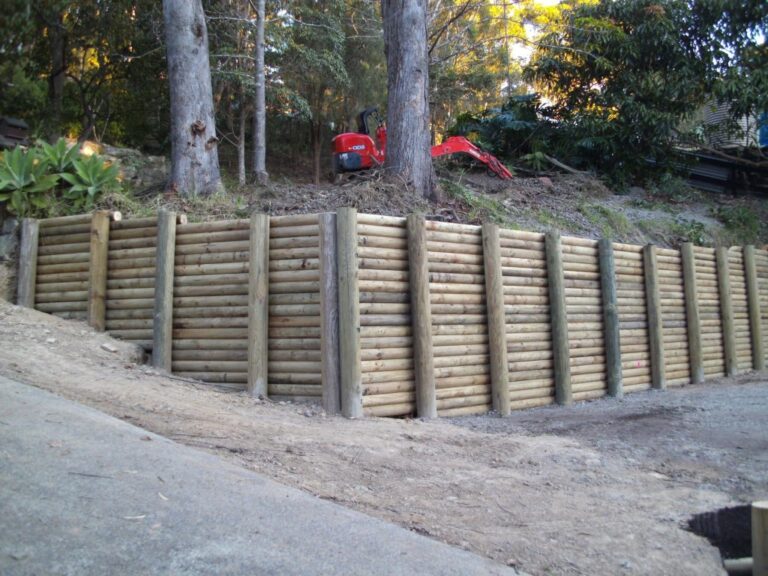
- Watch for leaning, bulging, cracking, rotten timber, sagging ground behind the wall and water seeping through.
- Most failures come back to drainage: water building up behind the wall.
- Don't add load above a wall that's moving. Keep water away and get it assessed.
- Natural hazards insurance gives only limited cover for retaining walls, for walls that support or protect your home or insured land within 60 m of the house.
Warning signs to look for
- Leaning or rotation: the top of the wall tilting forward, out of line with the base.
- Bulging: the face pushing out in the middle.
- Cracks in concrete or block walls, or split and broken timber lagging.
- Rot in timber poles at ground level, and moss or discolouration from constant damp.
- Blocked drainage: clogged weep holes, or water ponding at the top of the wall.
- Ground movement: cracks or sagging in the lawn, driveway or paving behind the wall, or a gap opening between wall and soil.
- Soil washing out through or under the wall after rain.
- A fence on top starting to lean.
Why walls fail
The most common cause is water. Saturated soil behind a wall is much heavier and pushes harder, and a wall without proper drainage takes the full load. Other causes are poles or footings that are too shallow, loads the wall was never designed for (a new driveway, carport or fence above it), timber with the wrong treatment level, and the wrong wall type for the ground. Port Hills loess is especially sensitive to water.
What to do
- Keep people and vehicles off and away from the area above and below a moving wall.
- Don't add load: no parking, stockpiles or new structures above it.
- Get water away: check downpipes, fix leaks and clear any drains or weep holes you can reach safely.
- Photograph it with a date, and keep checking whether it's getting worse.
- Get it assessed. We'll look at the wall, the ground and the drainage, and tell you honestly whether it can be strengthened or needs replacing. Larger or loaded walls need an engineer and a building consent, which we organise.
Insurance and natural hazards cover
If a wall is damaged in an earthquake, landslide or storm, talk to your insurer first. Natural Hazards Commission Toka Tū Ake (formerly EQC) provides only limited cover for retaining walls: walls that support or protect your home, insured buildings or insured land, and that are within 60 metres of the home. Walls failing from age, rot or poor construction generally aren't covered. We can put our assessment in writing to help with your claim.
Repair or replace?
Sometimes a wall can be saved with better drainage, extra support or replacing damaged sections. Often, especially with rotten timber or a badly leaning wall, it's better to replace it, or build a new engineered wall in front. See retaining walls.