
- Solid fences catch more wind. Post size, depth and spacing matter more than the boards.
- Use H4-treated posts in the ground and H3.2 rails and palings above ground, or premium macrocarpa or hardwood.
- Fences up to 2.5 m generally don't need building consent, but pool fences always have to meet the barrier rules, and district plan height rules can apply.
- Under the Fencing Act 1978, neighbours generally share the cost of an adequate boundary fence.
Wind is the main design load
Canterbury's nor'west winds put a fence under enormous load. A solid 1.8 m fence acts like a sail, and all that force goes into the posts. That's why a cheap fence usually fails at the ground, not the boards: posts too small, too shallow or too far apart.
On exposed sites, especially across the Selwyn plains and on hill sections, we tighten post spacing, go deeper and concrete posts so the fence stays straight.
Popular fence styles
- Horizontal board run: modern and private, popular on new builds. Leave small gaps between boards to let some wind through.
- Vertical paling: the classic boundary fence. Economical, easy to repair and good-looking with a capping rail.
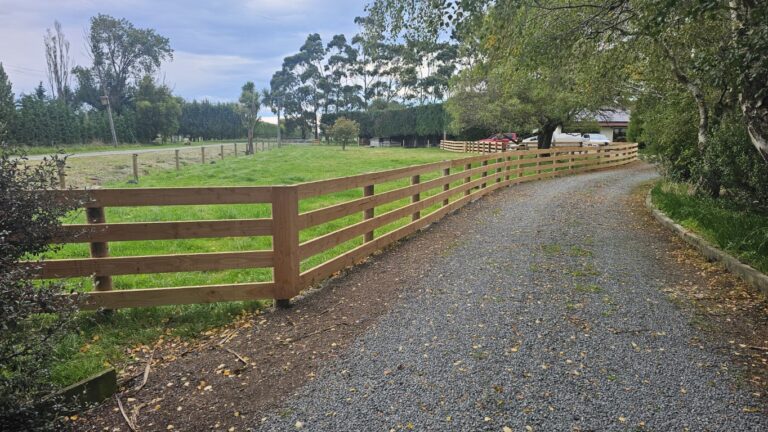
- Ranch rail / post and rail: open, rural look for lifestyle blocks and frontages. Very little wind load.
- Panel and slat systems: low-maintenance, consistent finish, many colours.
- Colour steel: durable and almost maintenance-free.
- Privacy screens and green screens: for outdoor living areas and softer boundaries.
Choosing timber
In New Zealand, treated radiata pine is graded by hazard class. For fences, posts in the ground should be H4, and rails and palings above ground H3.2. Macrocarpa and hardwoods give a richer, natural look and weather to a silver-grey if left untreated.
Consent and height rules
Under Schedule 1 of the Building Act, a fence up to 2.5 metres high generally doesn't need a building consent. Pool fences are different: they must meet the pool barrier requirements. In Christchurch, the permitted height is typically 1.8 m on the road boundary and 2 m on side and rear boundaries. A taller fence may need a resource consent. See fence height rules.
Boundary fences and neighbours
The Fencing Act 1978 says adjoining owners generally share the cost of an adequate boundary fence equally. Agree the style, height and cost split with your neighbour before work starts, ideally in writing. See who pays for a boundary fence.
Next step
Every site is different, so the best fence for you depends on exposure, ground, privacy needs and budget. Book a free site visit and we'll recommend the right fence and give you a fixed price. See fencing.