
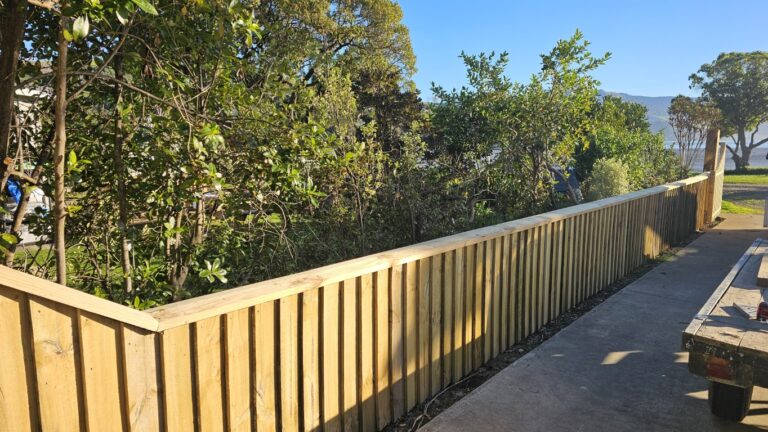
- Under the Fencing Act 1978, neighbours generally share the cost of an adequate boundary fence equally.
- If you can't agree, serve a fencing notice. Your neighbour has 21 days to object with a cross-notice.
- With no cross-notice in 21 days, your neighbour is treated as agreeing and is liable for their share.
- Fencing covenants, common in new subdivisions, can stop you claiming from the developer.
The basic rule
The Fencing Act 1978 says the occupiers of neighbouring properties that aren't divided by an adequate fence share the cost of fencing work on the boundary equally. "Adequate" means reasonably satisfactory for the purpose. It doesn't mean the most expensive fence one neighbour would like.
If one neighbour wants a higher-spec fence than the other thinks is needed, the usual approach is to share the cost of an adequate fence and have the neighbour who wants more pay the difference.
Start by agreeing
Most boundary fences are sorted with a conversation: agree the line, the style, the height, the contractor and the split, then put it in writing. We're happy to meet both neighbours on site and give one quote you can both see.
If you can't agree: the fencing notice
To make a neighbour legally liable for a share, you serve a fencing notice. It should include:
- your name and address, and your neighbour's
- the boundary to be fenced
- the type of fence and the work proposed
- who will do the work and the estimated cost
- when the work will start
- a statement that it's served under the Fencing Act 1978, and that your neighbour has 21 days to object
The 21-day cross-notice
If your neighbour objects to any part of the proposal, they have 21 days to serve a cross-notice explaining the objection and any counter-proposal: for example, that the existing fence is adequate or the proposal is too expensive. If no cross-notice arrives within 21 days, they're treated as agreeing and are liable for their share. A neighbour doesn't have to pay for work done before that time, so don't start early.
If it still isn't resolved
Unresolved fencing disputes can go to the Disputes Tribunal or the District Court, depending on the amount involved.
Fencing covenants and council land
Many new subdivisions in Christchurch and Selwyn have a fencing covenant on the title that stops owners claiming fencing costs from the developer. Check your title. If your boundary is with a Christchurch City Council park or waterway, the council will generally share the cost.
This guide is general information, not legal advice. Community Law has free help on fencing disputes.